Ford Engine Block Heater Fire Risk
Ford Motor Company has issued safety recalls involving certain engine block heaters sold as accessory parts for Ford and Lincoln vehicles, citing an increased risk of overheating and under-hood fire. These recalls affect block heaters installed in 2013–2024 Ford and Lincoln vehicles equipped with 2.0-liter engines, and they are particularly relevant for drivers in colder climates who rely on block heaters during winter months.
The recalls are identified by NHTSA campaign numbers 26E-003, 26V-011, and 26V-012.
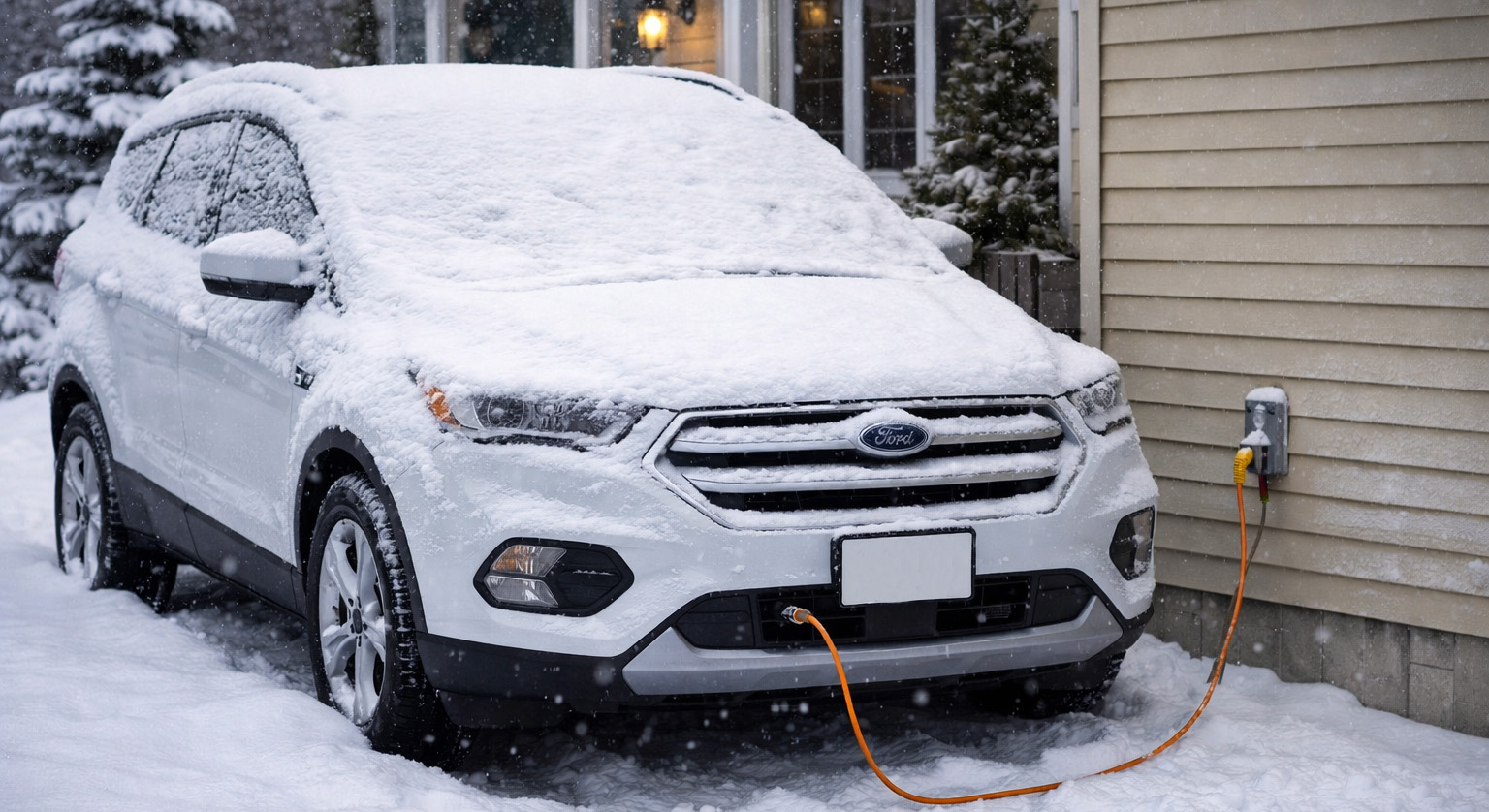
The Ford and Lincoln Vehicles Affected
- Ford Focus – 2016 through 2018 model years
- Ford Escape – 2013 through 2019 model years
- Lincoln MKC – 2015 and 2016 model years
- Ford Explorer – 2019 and 2024 model years
What Is the Problem?
The issue involves engine block heaters sold “over the counter” as accessory parts, specifically part number CV6Z-6A051-AA. According to federal safety filings, some of these block heaters may overheat and develop a coolant leak through the heater’s element pins.
When coolant leaks into the electrical portion of the block heater, it can lead to a resistive short circuit while the vehicle is parked and the block heater is plugged into an electrical power source. Because block heaters are typically used overnight or unattended, this defect raises serious safety concerns.
Why This Poses a Fire Risk
A resistive short circuit in the block heater increases the risk of an under-hood fire, particularly when the heater is plugged into a standard 110-volt outlet that does not have a functional Ground Fault Circuit Interrupter (GFCI) or circuit breaker.
Importantly, the risk exists only when the block heater is plugged in, but that is precisely when many owners expect their vehicles to be safest—parked at home, often near garages, homes, or other structures.
What Caused the Defect?
Ford’s investigation found that cracks can develop in the solder joints around the heater’s element base. These cracks allow engine coolant to seep into the interface between the block heater and the power cord. As the coolant evaporates, it leaves behind electrically conductive salt deposits.
Over time, these deposits can accumulate and form a conductive path—sometimes referred to as a “salt bridge”—or corrode electrical connections. Either condition can create an unintended electrical path to ground, ultimately resulting in a resistive short circuit and excessive heat.
Warning Signs Owners May Notice
Drivers may observe coolant spots on the driveway or garage floor, a loss of cabin heat, or engine overheating. Some vehicles may display a low coolant warning. In more serious cases, the condition can cause heat damage to the block heater wiring or connector, and owners may notice burning odors or smoke coming from the engine compartment. Any of these symptoms should be taken seriously, especially if the vehicle is regularly plugged in for cold-weather starting.
Why This Matters for Lemon Law Claims
While this defect involves an accessory component, it still raises significant safety concerns. Fires originating in the engine compartment can lead to property damage, personal injury, or worse, even when the vehicle is not in operation.
For some owners, repeated repairs, unresolved safety risks, or extended loss of vehicle use related to recall defects may support a lemon law or consumer protection claim, depending on state law and the vehicle’s repair history. This is especially true if the defect substantially affects the vehicle’s safety or value and has not been permanently corrected within a reasonable time.
What Owners Should Do Next
If you own a Ford or Lincoln vehicle from the 2013–2019 model years with a 2.0L engine and have an aftermarket or dealer-installed block heater, you should confirm whether your vehicle or accessory part is included in NHTSA recalls 26E-003, 26V-011, or 26V-012. Until repairs are completed, limiting or avoiding use of the block heater may reduce risk.
If you have experienced repeated issues, warning signs, or repair delays related to this defect, it may be worth speaking with a qualified lemon law attorney to understand your rights.
Bottom Line
Block heaters are designed to improve reliability in cold weather—not create fire hazards. These recalls highlight the importance of addressing even “accessory” defects when they pose a genuine safety risk. Ford’s action acknowledges the seriousness of the issue, but affected owners should remain vigilant until a permanent fix is completed.